
Creating Joy
€250.00
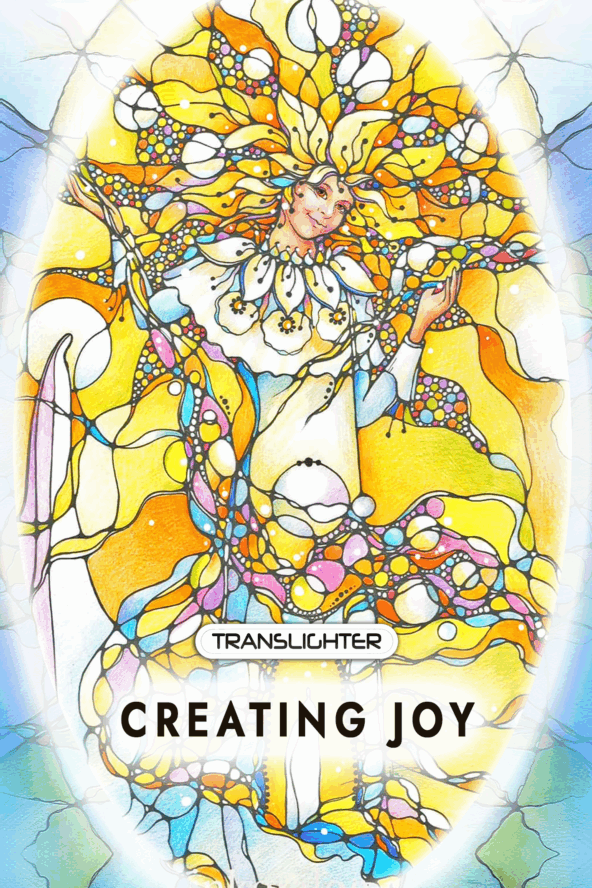
Creating Joy: A Light-Space for Enhancing Happiness and Hormonal Balance
🧠 Purpose and Benefits
- Normalizes the endocrine (hormonal) system
- Increases joy and emotional resilience
- Rewires neural pathways
Description
Creating Joy: A Light-Space for Enhancing Happiness and Hormonal Balance
🧠 Purpose and Benefits
- Normalizes the endocrine (hormonal) system
- Increases joy and emotional resilience
- Rewires neural pathways
🧬 Hormones and the Endocrine System
What brings us joy and happiness? Loretta Graziano Breuning, in her book “Habits of a Happy Brain”, explains that our bodies produce hormones—serotonin, dopamine, oxytocin, and endorphins—that generate feelings of happiness.
- Oxytocin: Promotes closeness, safety, and unity
- Dopamine: Drives motivation and reward-seeking behavior, essential for love and achievement
- Serotonin: Regulates attention, energy, metabolism, and stress resilience
- Endorphins: Natural painkillers that induce relaxation and euphoria
These hormones are regulated by the pituitary gland, hypothalamus, and hippocampus—ancient brain systems responsible for perception, emotion, and memory.
Concern: Over time, hormonal imbalance and reduced sensitivity in these regulatory centers can lead to fatigue, sadness, and diminished joy.
⚠️ Automatic Mental Reactions
Why does sensitivity decline? Our brains are evolutionarily wired for survival, reacting quickly to threats. This default setting favors negative signal processing—even in today’s safer world.
- Thoughts alone can alter hormonal states. Thinking of a river might calm you, unless you perceive it as a flood threat.
- Negative thoughts overload the endocrine system with imagined dangers.
- Constant digital stimulation (social media, work stress) adds pressure, causing the system to dull its sensitivity.
Key Insight: The brain isn’t “bad”—it’s just outdated. But thanks to neuroplasticity, we can reprogram these survival-based responses.
🕵️ Hidden Influences
We react not only to our own thoughts but also to others’ thoughts about us. An experiment showed that blood plasma’s infrared absorption changed when someone thought positively about the donor—even from another room.
Conclusion: Thoughts—ours and others’—can influence our biochemistry and joy levels.
Creating Joy helps reduce the impact of negative information and restores hormonal sensitivity.
🧘 Healing Traumatic Experiences
Past emotional and physical traumas leave psychosomatic imprints. Unresolved issues act like “clumps” of undigested life experiences, blocking the endocrine system.
Creating Joy helps:
- Erase traumatic memory from the body’s information field
- Rewire neural networks
- Release trapped energy and restore vitality
- Enhance results during therapy or bodywork sessions
⏳ Multidimensional Time and Future Memory
Creating Joy supports:
- Alignment with the flow of time and connection to the Creator
- Unlocking innate knowledge stored in every cell
- Development of emotional intelligence and bodily awareness
- Synchronization of organ systems and perception
- Formation of a “transition system” that aligns corrected systems with future memory
This process follows a trajectory: Meaning → Strength → Action → Renewal → Knowledge → Receiving
Related products
-
- Sale!
- HLS Equipment, Infopathy and Infoceuticals, New on GDVPLANET
Glowing IC Pad 3
- Original price was: €314.00.€218.80Current price is: €218.80.
- Add to cart



Reviews
There are no reviews yet.